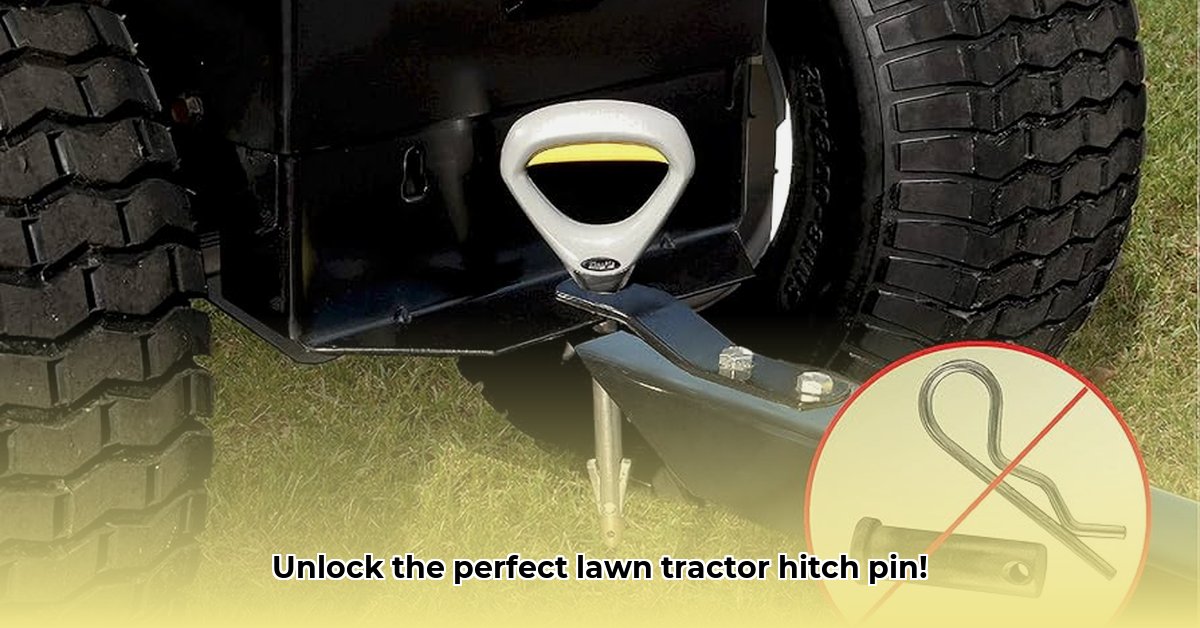
Finding the right hitch pin for your lawn tractor might seem insignificant, but it's crucial for safe and efficient operation. A wrong choice can lead to anything from annoying wobbles to serious safety hazards. This comprehensive guide simplifies the process, covering selection, installation, maintenance, and troubleshooting, regardless of your experience level. Let's get you back to enjoying your perfectly manicured lawn, worry-free! For specific John Deere tractor needs, check out this helpful resource: John Deere Hitch Guide.
Understanding Hitch Pin Types and Sizes
Lawn tractor hitch pins aren't one-size-fits-all. Understanding their variations is key to selecting the correct one.
Material Matters: While most are steel, the type significantly impacts durability. Standard steel is common and affordable but prone to bending or breaking under stress. Hardened steel offers superior strength but at a higher price. Stainless steel, the most expensive option, provides exceptional rust resistance and longevity. The best choice depends on frequency of use and the weight of your attachments. Isn't it worth investing in a durable pin to avoid potential damage or injury?
Design Differences: Beyond the basic cylindrical pin, variations exist. Clevis pins, with a loop at one end, offer easier handling and reduced risk of falling out. Some pins include locking mechanisms for enhanced security, especially beneficial for heavier attachments. Do you need the extra security of a locking mechanism for your heavier attachments?
Sizing Up: Precise measurements are paramount. Diameter and length, typically in millimeters or inches, must precisely match your tractor and attachment. Incorrect sizing leads to loose (and unsafe) connections or prevents attachment entirely. Never guess – the detailed instructions below will guide you.
Choosing Your Perfect Hitch Pin: A Step-by-Step Guide
Selecting the perfect hitch pin involves careful attention to detail. Here’s a step-by-step guide:
Step 1: Identify Your Tractor and Attachments: Determine your lawn tractor's make, model, and year, and the specific attachment (mower deck, trailer, spreader, etc.). This information is crucial for compatibility.
Step 2: Consult the Owner's Manual: Your owner's manual specifies the exact hitch pin requirements—diameter and length—for each attachment. Locate the relevant section, often a parts diagram. Have you checked your owner's manual for precise specifications?
Step 3: Online Search and Filtering: Use online retailers' search filters (dimensions, material, etc.) to find matching pins. Pay meticulous attention to details; even slight discrepancies can create unsafe connections. Did you know that meticulous online searching can significantly narrow down your options?
Step 4: Verify Compatibility: Before purchasing, double-check specifications. If unsure, contact the retailer or attachment manufacturer for clarification. Is there any potential incompatibility between your tractor and attachments?
Installing and Removing Your Hitch Pin: A Safe Approach
Proper installation is vital for safety and functionality:
Step 1: Prioritize Safety: Always power down the tractor and disconnect the power source before handling hitch pins. This precaution is non-negotiable. Do you always prioritize safety before working on your lawn tractor?
Step 2: Precise Alignment: Carefully align the hitch receiver and attachment for smooth pin insertion.
Step 3: Insert the Pin: Gently insert the hitch pin into its designated holes. For clevis pins, ensure proper seating.
Step 4: Secure the Connection: Verify a snug fit. Any wobble indicates a problem requiring immediate attention. Is your connection secure and wobble-free?
Maintenance and Troubleshooting: Keeping Your Hitch Pins in Top Shape
Regular maintenance significantly extends hitch pin lifespan:
Regular Inspections: Inspect pins for bending, cracks, or excessive wear. Replace any damaged pins immediately to prevent accidents. How often do you inspect your lawn tractor hitch pins?
Lubrication: Apply a thin lubricant to reduce friction and enhance smooth movement.
Proper Storage: Store pins in a dry, clean location to prevent rust.
Hitch Pin Buyer's Guide: Recommendations and Considerations
While specific product recommendations are market-dependent, consider these factors:
- Reputation: Choose reputable manufacturers with positive customer reviews.
- Durability: Prioritize materials (like hardened steel or stainless steel) for long-term use and safety.
- Ease of Use: Look for designs that simplify installation and removal.
Compatibility Issues: A Common Challenge
A significant hurdle is the lack of standardization across lawn tractor brands, leading to compatibility issues. Thorough research, including contacting manufacturers or retailers, is essential to avoid purchasing incompatible pins. Did you know that compatibility issues are a common problem?
Table: Hitch Pin Material Comparison
| Material | Pros | Cons |
|---|---|---|
| Standard Steel | Affordable, widely available | Prone to bending or breaking under stress |
| Hardened Steel | Stronger, more durable than standard steel | More expensive |
| Stainless Steel | Rust-resistant, long lifespan, very durable | Most expensive |
Choosing the right hitch pin is about safety and efficiency. Following this guide ensures a smoother, safer experience with your lawn tractor.